
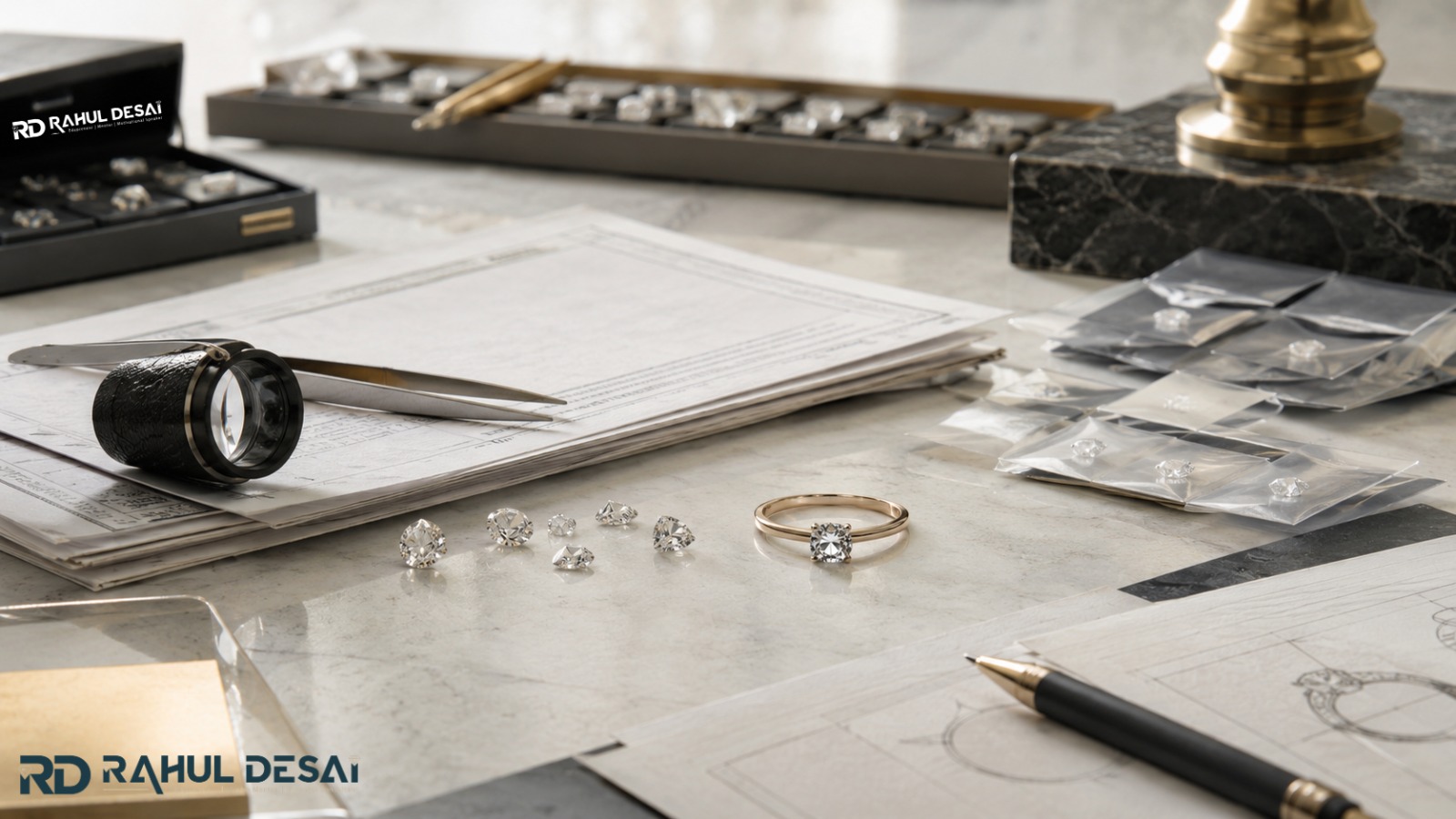
In the jewellery business, a diamond is never just a diamond.
To the customer, it represents beauty, emotion, celebration, and value. To a jeweller, it is inventory. To a manufacturer, it is a production input. To a supplier, it is trade. But in today’s market, a diamond is also a statement of trust.
And that trust begins much before the product reaches the showcase.
It begins with the supplier.
For years, diamond sourcing was mainly evaluated through familiar questions:
- What is the price?
- What is the quality?
- Is it certified?
- Can the supplier deliver on time?
- Are the payment terms workable?
These questions are no longer enough.
The diamond industry has changed. Today, jewellery manufacturers and retailers operate in a market shaped by stronger consumer awareness, stricter export expectations, laboratory-grown diamond disclosure, origin-related questions, responsible sourcing, and compliance pressure.
This means the diamond supplier is no longer just a vendor.
The supplier is part of your risk chain, your reputation chain, and your customer-confidence chain.
Supplier selection is risk selection
Every supplier brings more than stones. They bring a system. That system may be disciplined, transparent, and well-documented. Or it may be casual, unclear, and difficult to verify.
When a jewellery business buys from a supplier, it also inherits part of that supplier’s operating culture.
- If the supplier is careless about documentation, the manufacturer may face export questions later.
- If the supplier does not clearly separate natural and laboratory-grown diamonds, the retailer may face a customer-trust issue.
- If the supplier is vague about treatments or product declarations, that uncertainty moves downstream.
The old question was: “Can this supplier give me the right goods at the right price?”
The better question today is: “Can this supplier protect my business after the goods leave their office?”
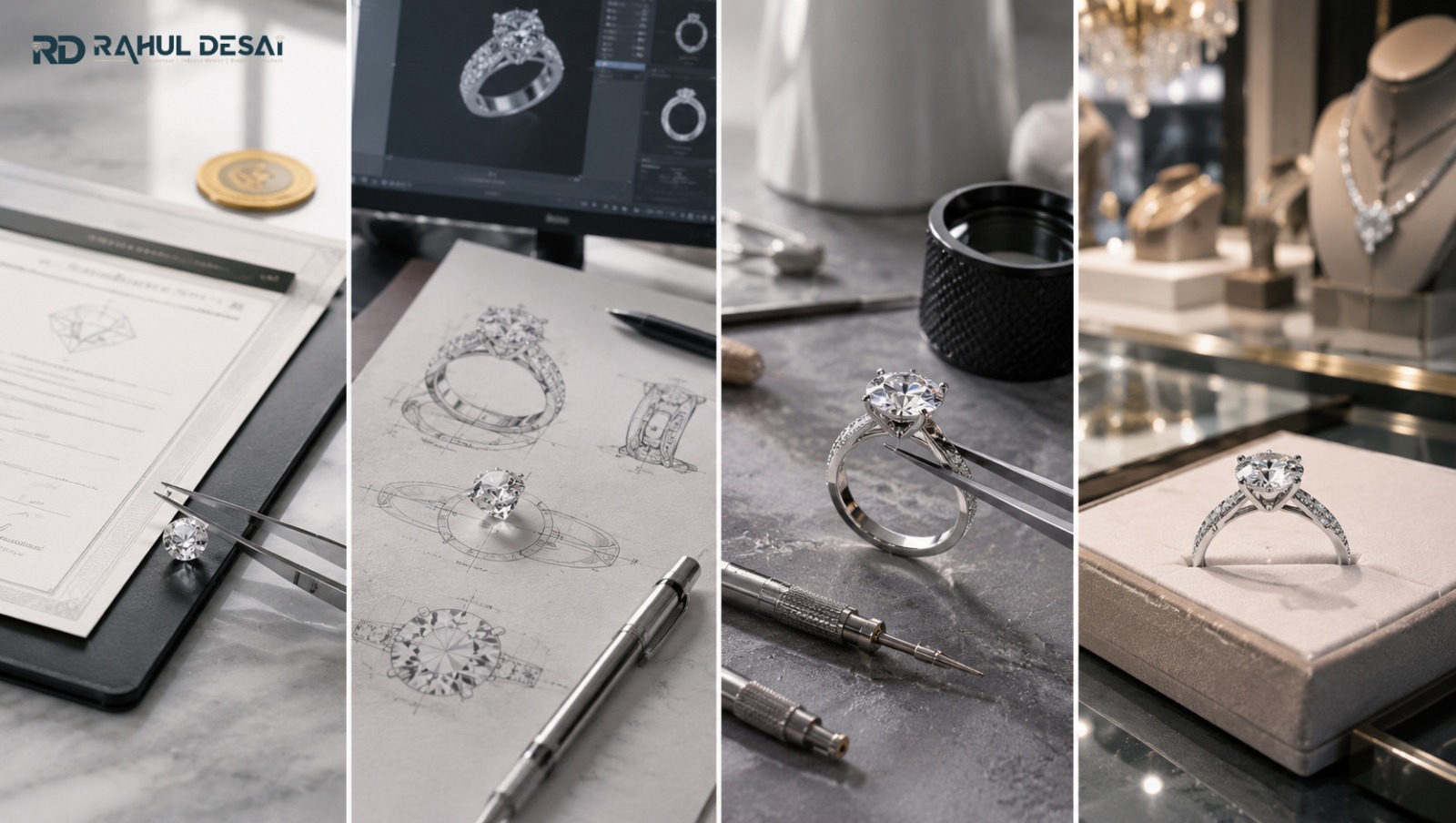
The cheapest parcel is not always the lowest-cost parcel
Price matters in diamonds. Margins are tight and competition is high. But the cheapest parcel can become expensive if it creates problems later.
A weak supplier can lead to re-sorting, recertification, delayed production, rejected orders, unclear disclosure, customer disputes, export documentation issues, or reputational damage.
The true cost of sourcing is not only the buying price. It also includes the cost of uncertainty.
A responsible supplier reduces that uncertainty.
They may not always be the cheapest on paper, but they can be far more valuable in practice because they protect time, trust, and business continuity.
What it means for manufacturers
For jewellery manufacturers, the supplier affects production reliability.
A manufacturer may have excellent design, skilled teams, strong craftsmanship, and good buyer relationships. But if diamond sourcing is weak, the entire production cycle becomes vulnerable.
The right supplier supports consistent assortments, accurate grading, proper certificates, reliable delivery, and clear communication. This helps reduce production delays, quality disputes, and buyer rejections.
For export manufacturers, the supplier matters even more.
International buyers increasingly expect clarity around documentation, sourcing practices, natural versus laboratory-grown segregation, and compliance-sensitive declarations. A manufacturer may create a beautiful finished product, but if the sourcing trail is weak, the order may face questions.
Export readiness does not begin at shipping alone, it begins at sourcing.
What it means for retailers
For retailers, the supplier affects consumer trust.
The retail counter is where the final promise is made. Customers today are more informed. They ask about certificates, natural diamonds, laboratory-grown diamonds, treatments, exchange value, resale, and authenticity.
A salesperson can answer confidently only when the retailer has sourced confidently.
If the supplier provides clarity, the retailer can train the sales team better. If the supplier provides proper documentation, the retailer can support the customer conversation better. If the supplier is transparent, the retailer can protect the brand better.
A retailer who cannot explain what they are selling may lose trust, even if the product is good. In retail, confidence is part of the product. And that confidence often comes from the right product.
Natural or laboratory-grown: the issue is disclosure
The market today includes natural diamonds, laboratory-grown diamonds, treated diamonds, and simulants. Each category has its own place and its own customer.
The problem is not that these categories exist. The problem is confusion.
A responsible supplier must maintain clear separation, accurate descriptions, proper testing, and correct documentation. Natural diamonds should not be confused with laboratory-grown diamonds. Treatments should be disclosed. Certificates should match the product. Sales language should be precise.
Clear disclosure protects the supplier, the manufacturer, the retailer, and the customer.
Documentation is part of the product
Earlier, documentation was seen as paperwork. Today, it is part of the product’s commercial value.
For manufacturers, documentation supports production records, export orders, buyer audits, and shipment confidence.
For retailers, it supports sales conversations, customer education, returns, exchange policies, and after-sales trust.
A diamond with weak documentation may still have physical value, but it has reduced commercial confidence. The stronger the documentation, the easier it is for the diamond to move through the chain with trust.
The right supplier is a growth partner
The best diamond suppliers today do not only provide stock. They provide confidence.
- They help manufacturers produce consistently.
- They help exporters answer buyer questions.
- They help retailers sell with conviction.
- They help protect the industry from confusion and mistrust.
A good supplier is disciplined with quality, documentation, disclosure, delivery, and communication. They understand that their responsibility does not end once the invoice is raised.
The future of the jewellery business will reward companies that combine beauty with discipline. Design will matter. Price will matter. Craftsmanship will matter. But trust will matter even more. The diamond you sell carries your brand name. But the confidence behind it begins with your supplier.
That is why your diamond supplier matters more than ever.