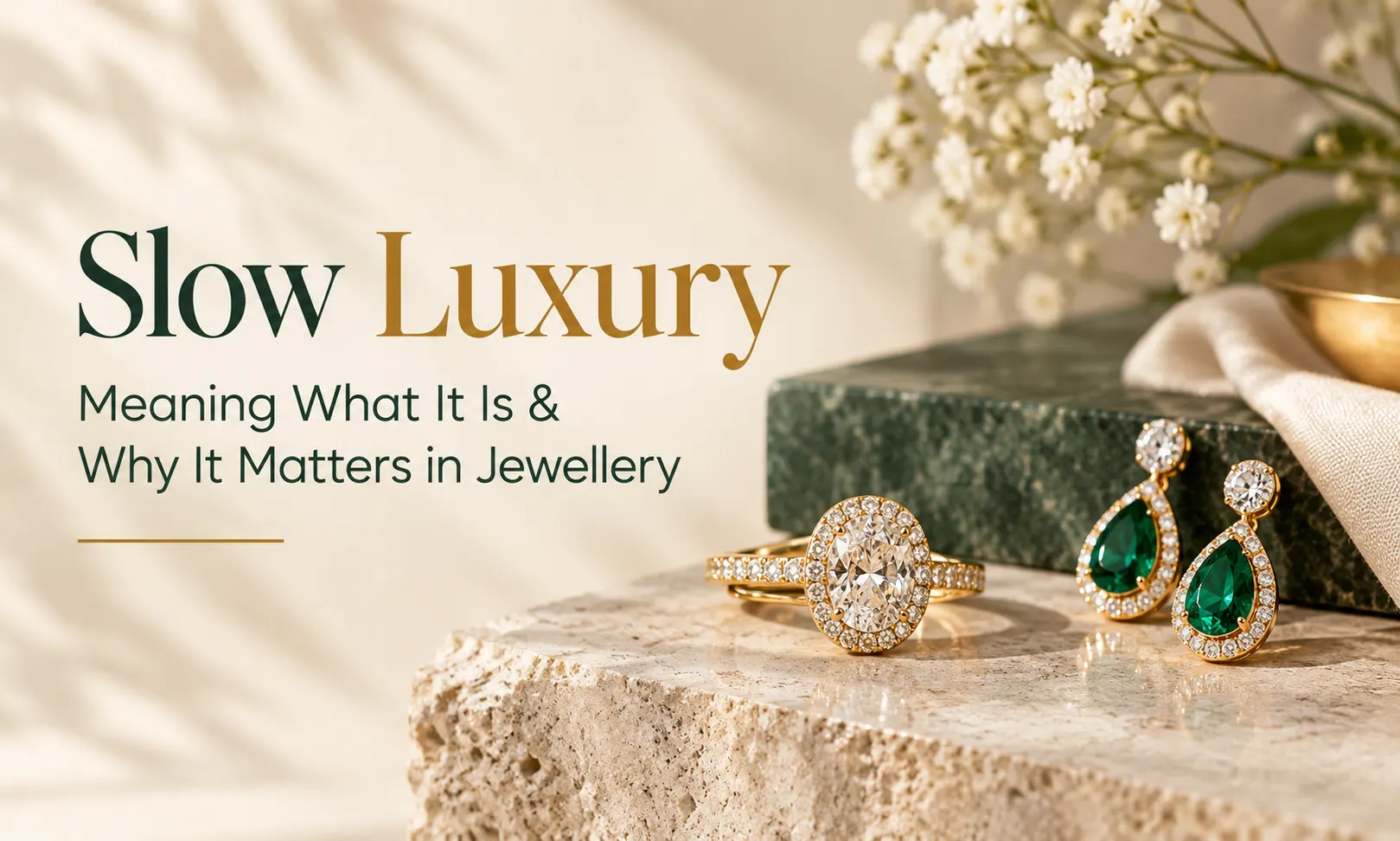
What is slow luxury?
Slow luxury is the idea that real value comes from how a piece is made, sourced and kept, not from how fast it can be launched or how loudly it is marketed. It favours fewer, better things: craftsmanship over volume, traceable materials over vague claims, and designs meant to be worn and passed on rather than replaced each season.
In jewellery this idea fits naturally. A gold chain or a diamond ring is usually bought once for a reason, and it can last for generations. Slow luxury simply asks the maker and the seller to behave as if that were true.
Slow luxury vs fast luxury
Fast luxury chases trends. Collections turn over quickly, discounts do the selling, and the story behind a piece is thin. Slow luxury moves at the pace of the work.
| Fast luxury | Slow luxury | |
| Pace | Frequent drops, short trend cycles | Fewer pieces, longer design cycles |
| Materials | Origin rarely explained | Sourcing and certification shown |
| Making | Volume and speed | Skilled hand work, quality checks |
| Selling | Urgency and discounts | Advice, fit and long-term care |
| After the sale | Little follow-up | Repair, resizing, servicing |
Neither is wrong for every customer. The difference is what the buyer is promised and whether the business can keep that promise.
Why it matters in jewellery
Jewellery is a trust purchase. Most buyers cannot judge purity, cut or make by eye, so they rely on the jeweller’s word and on paperwork. Slow luxury gives that trust something to stand on.
- Craftsmanship: finish, stone setting and clasp quality decide whether a piece lasts decades.
- Traceability: buyers increasingly ask where gold and diamonds come from and who certified them.
- Timeless design: pieces that avoid short trends hold their appeal and resale conversation.
- Conscious buying: customers who buy less often want to be sure of what they bought.
For a retailer, it also protects margin. A business known for quality and honest advice does not need to compete on discounts alone.
Slow luxury in practice
The pattern shows up in the same few places across the jewellery world:
- In-house workshops. Heritage houses are known for keeping design and making close together and for training their own artisans over years.
- Documented origin. Jewellers who show the source of their gold, the grading report of a diamond or a BIS hallmark give customers proof, not adjectives.
- Made-to-order lines. Small batches and bespoke work reduce dead stock and let the customer shape the piece.
- Lifetime service. Free cleaning, resizing and repair programmes keep a piece in use and the customer returning.
- Lab-grown and natural, honestly labelled. Whatever the stone, clear disclosure is the slow luxury standard.
How jewellers can adopt it
You do not need to change your whole business at once. Start with what customers can see and check.
- Tell the making story. Put the maker, the process and the materials on the tag, the website and the invoice.
- Show the paperwork. Offer hallmark details and grading reports at the counter and in product pages.
- Curate harder. Cut slow-moving designs and keep a tighter range you can explain well.
- Train staff to advise, not push. A salesperson who can explain why one piece lasts longer builds repeat buyers.
- Promise aftercare. Publish what you will clean, resize or repair, and for how long.
Read the earlier thinking in The Slow Luxury Mindset: Redefining Value in the Jewellery Industry. If you want help applying this to your own brand, see RD Consultancy or book a jewellery brand consultation.
Frequently Asked Questions
What does slow luxury mean in simple words?
Buying and selling fewer, better, well-documented pieces made with care, instead of chasing trends and discounts.
Is slow luxury only for high-end brands?
No. A neighbourhood jeweller can apply it through honest sourcing, clear paperwork and good aftercare.
Does slow luxury mean higher prices?
Often the price per piece is higher, but the cost per year of wear is lower, and the business spends less on discounting.
How does a jeweller start?
Begin with the making story, visible certification and a written aftercare promise.