Five Business Lessons From Titan’s Story
I almost did not watch Made in India: A Titan Story immediately.
Not because I was uninterested, but because every new business series today arrives with the same familiar noise. Everyone watches it, everyone reviews it, everyone extracts leadership lessons, and within a few days, we all move on.
So I went in expecting to watch the story of a watch company.
Instead, I found myself asking a more uncomfortable question:
What am I really building?
That is where the story became powerful for me. Because Titan, at least through this series, was never only about watches. It was about ambition, belief, capability, and the refusal to accept that world-class design, manufacturing, reliability, and innovation belonged only to the West.
At one level, it is the story of Titan. At a deeper level, it is the story of what happens when a company becomes an expression of national confidence.
And that is why it stayed with me.
1. Refuse Small Thinking
Xerxes Desai immediately stands out in the story, not because he was leading a company, but because he seemed deeply uncomfortable with routine and mediocrity. There is a rare kind of leader who is not looking for an easy chair, but for a meaningful challenge. Xerxes seemed to belong to that category. His ambition was not loud. It was restless. And that restlessness became contagious.
Then comes the moment that quietly defines the Titan story: India’s ability to manufacture quality watches is questioned. The message is almost dismissive: Indians do not know how to make watches.
Every entrepreneur, in some form, knows this moment.
Someone will always tell you that your market is too small, your resources are too limited, your team is not experienced enough, or your idea is too ambitious. The issue is not hearing those doubts. The issue is accepting them as your boundary.
J.R.D. Tata’s response was not loud, dramatic, or emotional. It was something far more powerful: calm refusal. He did not accept the limitation. He accepted the challenge. And perhaps that is where true leadership begins.
Many businesses are built around opportunity. Titan was built around a challenge. And challenges often create stronger organizations because they force clarity, courage, and conviction from the very beginning.
2. Build Capability Before Scale Through Education
Titan was not just building a watch. It was building capability.
In another context, that sentence could sound like corporate messaging. But here, it felt genuine because the series showed what it actually meant.
It meant training people who had never made watches before. It meant building skills in Hosur. It meant investing in human potential before waiting for perfect resumes. It meant trusting people before they had fully proven themselves.
As someone who has spent years in education and business consulting, this deeply resonated with me. Because education, at its core, is also an act of belief. You invest in people before they become capable. You believe in them before they fully believe in themselves.
Businesses often make the mistake of investing in machines before investing in people. But machines create products. People create legacies.
For jewelry businesses, this lesson is especially important. A salesperson who only knows the product can complete a transaction. A salesperson who understands trust, craftsmanship, customer emotion, and brand purpose can build relationships for years.
Scale does not begin with systems alone. It begins with people who understand why the system exists.
3. Turn Culture Into Ownership
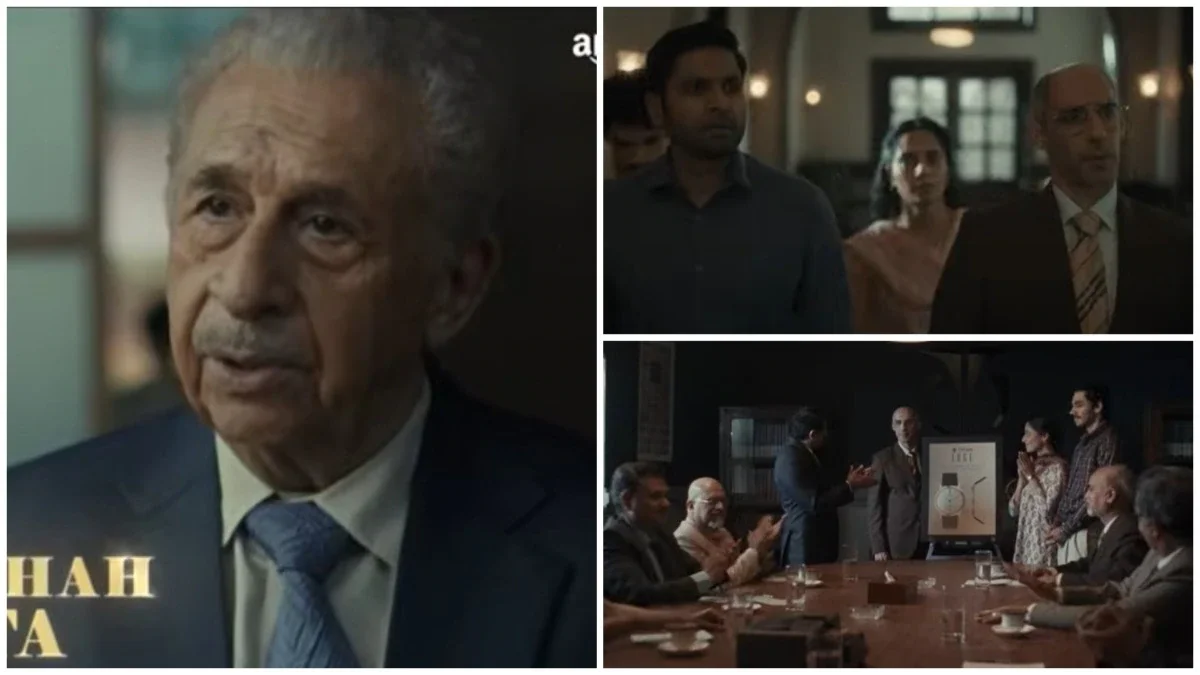
One of the most emotional moments in the series is when employees remove their own watches because Titan had not yet created one of its own.
Nobody forced them. Nobody rewarded them. Nobody wrote it into a policy. They simply felt it.
That is culture.
Culture is not what is printed on the office wall. It is not what is written in the employee handbook. Culture is what people do when nobody is watching. It is the moment when employees stop behaving like employees and start behaving like owners.
Today, companies spend enormous time trying to create engagement. Titan’s story reminds us that the strongest engagement comes from meaning.
People do not leave organizations only because work is hard. They leave when work becomes meaningless.
This is especially true in customer-facing businesses. In jewelry retail, the customer does not only buy a product. They buy assurance, explanation, trust, emotion, and memory. If the people representing the brand do not feel connected to its purpose, the customer will sense it.
Great culture is not created through slogans. It is created when people feel they are part of something worth protecting.
4. Build Brands Through Experience
Another lesson from Titan’s journey is the power of demonstration.
In business, we often over-discuss and under-demonstrate. We create strategies about strategies. We conduct meetings about meetings. But Titan’s journey shows that action creates clarity faster than conversation ever can.
Show the prototype. Test the idea. Train the person. Open the store. Face the customer. Learn. Improve. Repeat.
This is true in every industry, but especially in retail.
A customer does not experience a brand through a strategy document. A customer experiences it through the store environment, the product explanation, the confidence of the salesperson, the transparency of pricing, the service, and the memory they carry home.
That is why World of Titan was not merely a retail strategy. It was a brand strategy.
Titan understood that a product can be copied, a price can be matched, and a design can be imitated. But trust, experience, reliability, and emotional connection are much harder to replicate.
This is a critical lesson for jewelry businesses. Jewelry is not just a product category. It is an emotion-led business. People walk into a store with aspiration, hesitation, family expectations, financial considerations, and often, a deeply personal occasion attached to the purchase.
In such a business, trust is not a soft value. It is a commercial advantage. The strongest brands do not merely sell. They create confidence.
5. Never Let Success Become a Comfort Zone
And then there is failure. Most organizations celebrate success and hide failure.
Titan’s story suggests something more mature: if failure comes from sincere effort, it deserves respect.
When people are afraid to fail, they stop experimenting. When they stop experimenting, growth slows. Freedom to fail creates freedom to innovate. Perhaps the most invisible question in the Titan story is:
What next?
Titan proves India can manufacture world-class watches. What next?
It embraces quartz. What next? It focuses on design. What next? It builds retail. What next? It creates Titan Edge. What next?
That is the mindset that separates companies that succeed once from companies that keep evolving.
Success is dangerous when it becomes a resting place. It is powerful when it becomes the foundation for a bigger dream. This is the lesson many established businesses, especially family-led and legacy-led jewelry businesses, must take seriously. Past reputation is valuable, but it cannot become a substitute for future relevance.
A brand cannot survive on memory alone. It must keep earning meaning.
So yes, Made in India: A Titan Story is about watches. But only on the surface. At its heart, it is about ambition with values. Scale with trust. Innovation with humility. Pride without arrogance. And the courage to build something larger than yourself.
Titan did not merely manufacture watches. It manufactured confidence.
Confidence in Indian talent. Indian design. Indian manufacturing. And Indian entrepreneurship.
And perhaps that is the real reason this story matters. Because every entrepreneur, at some point, must ask:
Am I only building a business? Or am I building belief?